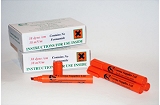
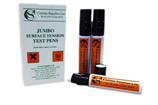
We offer high-quality corona sleeving and dyne pen products. Our silicone-based corona sleeving provides excellent electrical insulation and protection against ozone and UV radiation. Additionally, our dyne pen products enable precise surface tension measurements for optimal material adhesion properties.
The Range
Corona treater silicone sleeving
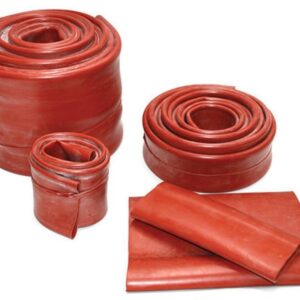
We are a leading supplier of silicone sleeve for the corona treatment process in South Africa, as well as the rest of Africa. The dielectric silicone sleeve is manufactured from a very specific silicone rubber compound, providing excellent electrical, thermal and chemical resistance, making it ideally suited to the harsh environment that is the corona treatment process. Produced specifically as an electrical dielectric sleeve, it is manufactured to extremely close tolerances, ensuring reliable and consistent treatment performance.
The elasticity of the treater roll sleeves allows for easy mounting onto the roll by means of compressed air. Exacting tolerances on wall thickness mean sleeved roll concentricity is never compromised – a key issue at today’s high line speeds.
Dyne Pens
To obtain optimum adhesion when printing, laminating or coating one needs to increase the surface energy of the substrate. Testing this surface energy can be achieved by surface energy test inks or pens, more commonly known as Dyne Inks or Pens.
We supply a range of Dyne testing products, such as Dyne Test Pens and Inks to measure surface tension to the southern Africa region. All dyne inks and pens are supplied with simple instructions for easy operation.
The Dyne Test Pens are designed to indicate film surface treatment levels on polymer based substrates and establish that the material is correctly treated prior to printing. The barrel of the test pen is printed with the minimum dyne level that the ink will determine.
Dyne Testing method: when the dyne level ink is applied to the substrate, the liquid will either form a continuous film on the surface or reticulate into small droplets. If the dyne level ink remains as a continuous film for 3 seconds, the substrate will have a minimum surface energy of that ink value, expressed in dynes. Should the dyne ink reticulate, the surface energy of the substrate is lower than that of the liquid itself. The dyne level can be then be determined by applying a range of dyne level inks above or below the measured level.