Description
Why measure the appearance of transparent materials with an inline solution?
The Rhopoint ID measurement technology (patent pending) was jointly developed with Eidgenössische Technische Hochschule (ETH) Zürich.

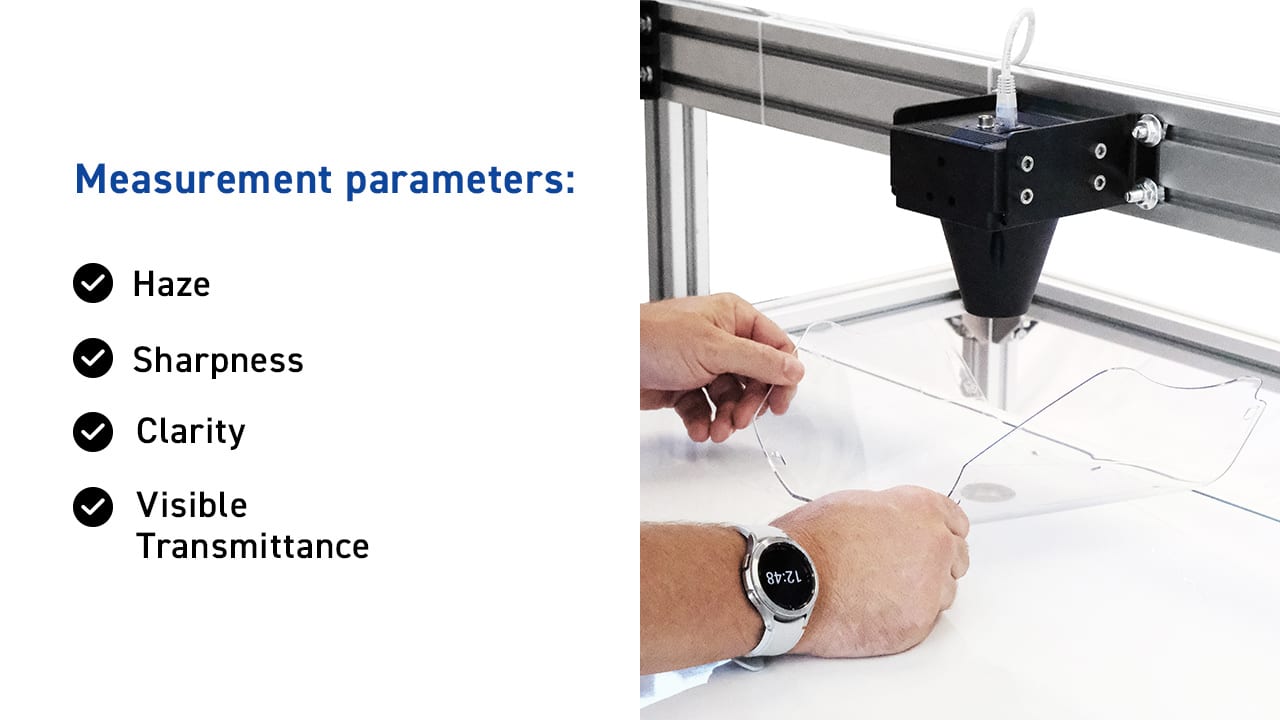




The Rhopoint ID measurement technology (patent pending) was jointly developed with Eidgenössische Technische Hochschule (ETH) Zürich.
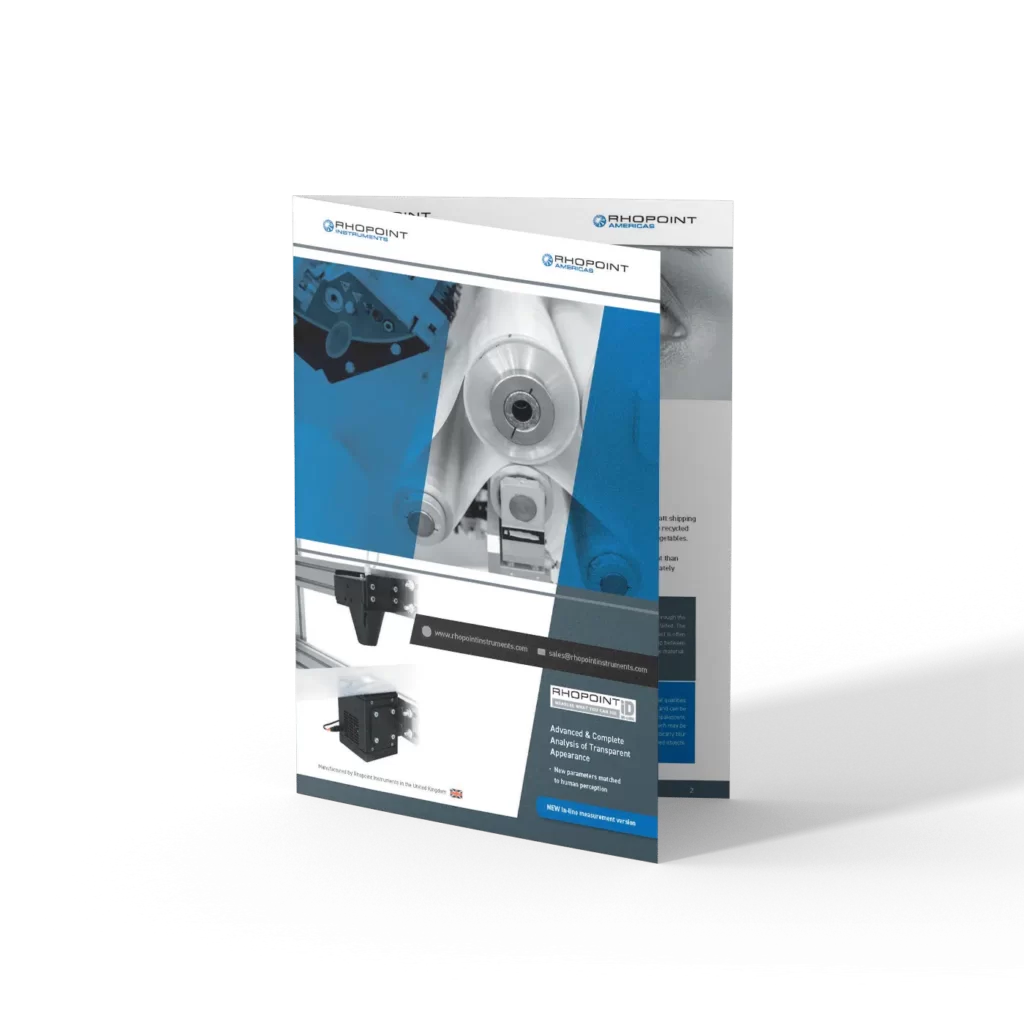
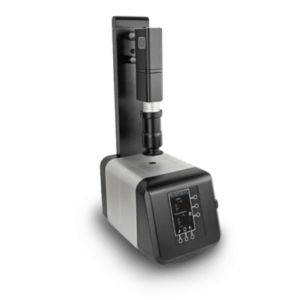
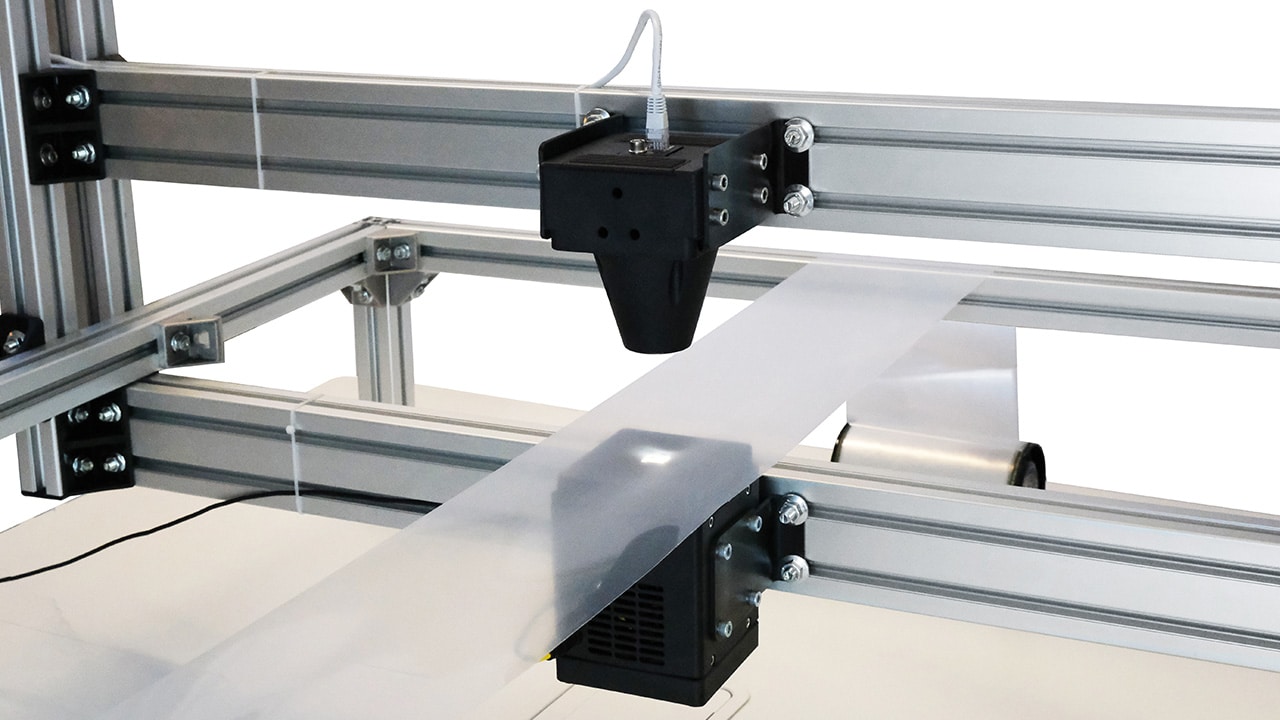
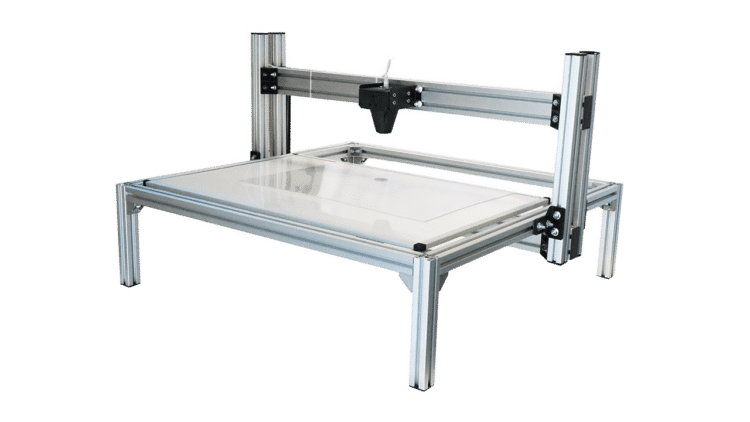
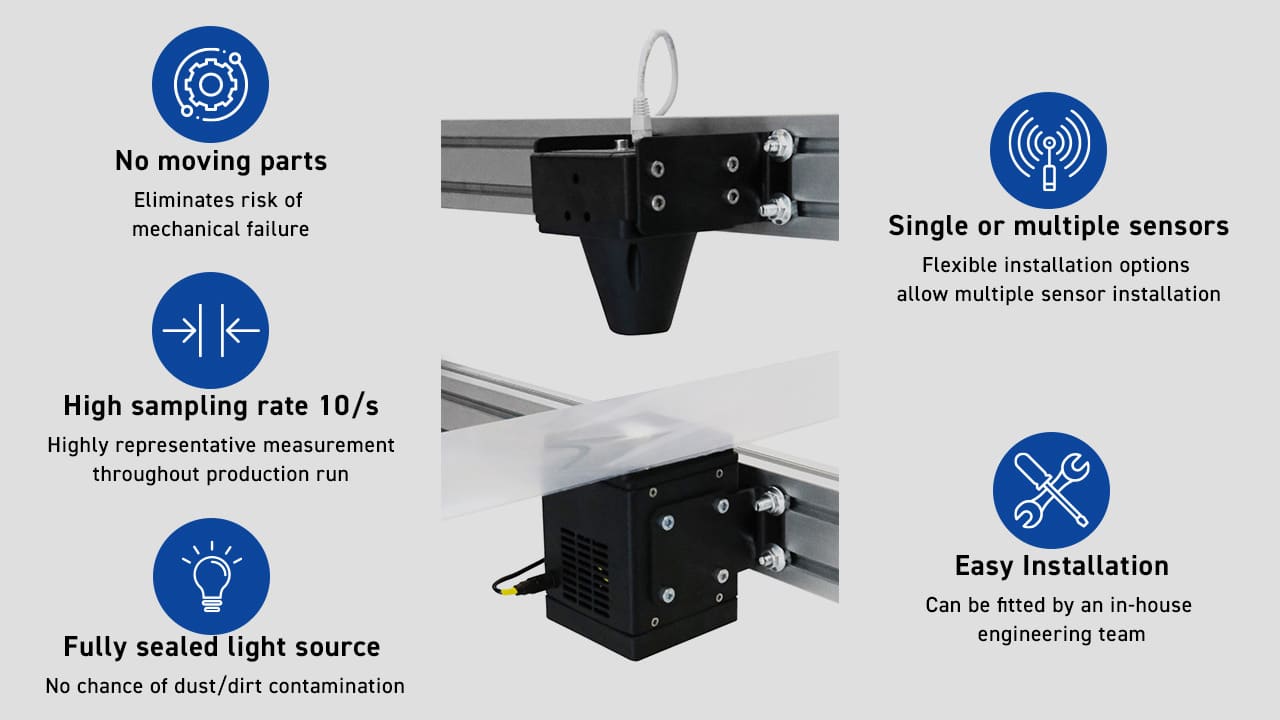
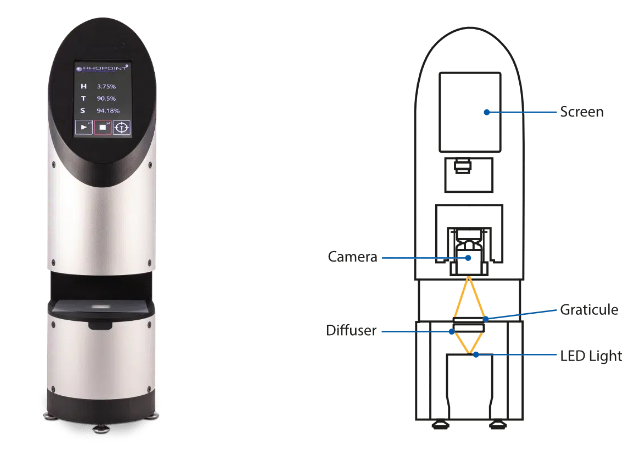
The Rhopoint ID-Inline is a camera-based system which fully quantifies product transparency with parameters that are highly correlated to human perception.
A backlit, high accuracy, reference target graticule functions as the viewed object, creating a highly defined pattern of light intensities with optimally sharp transitions between the backlit and masked areas.
The camera works like the human eye quantifying changes in the transmission of the light caused by a test material.
Image analysis techniques are used to characterise these effects into parameters which correlate closely with human perceptions.
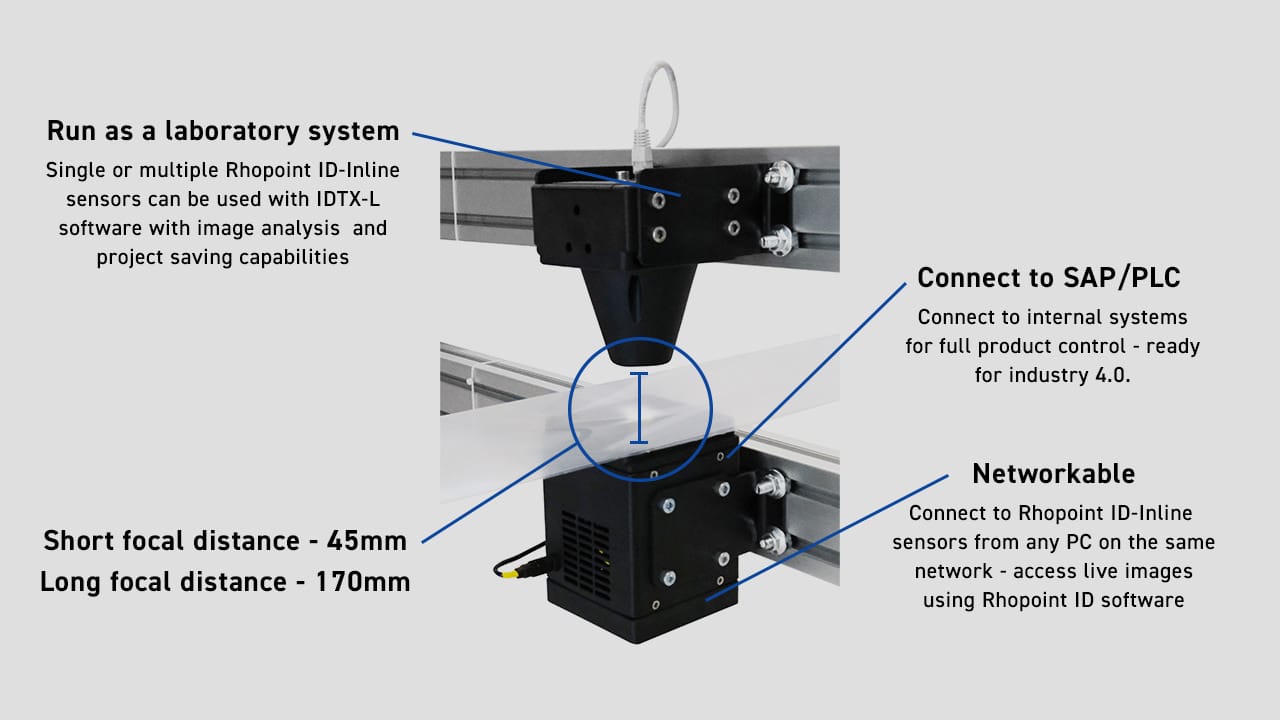
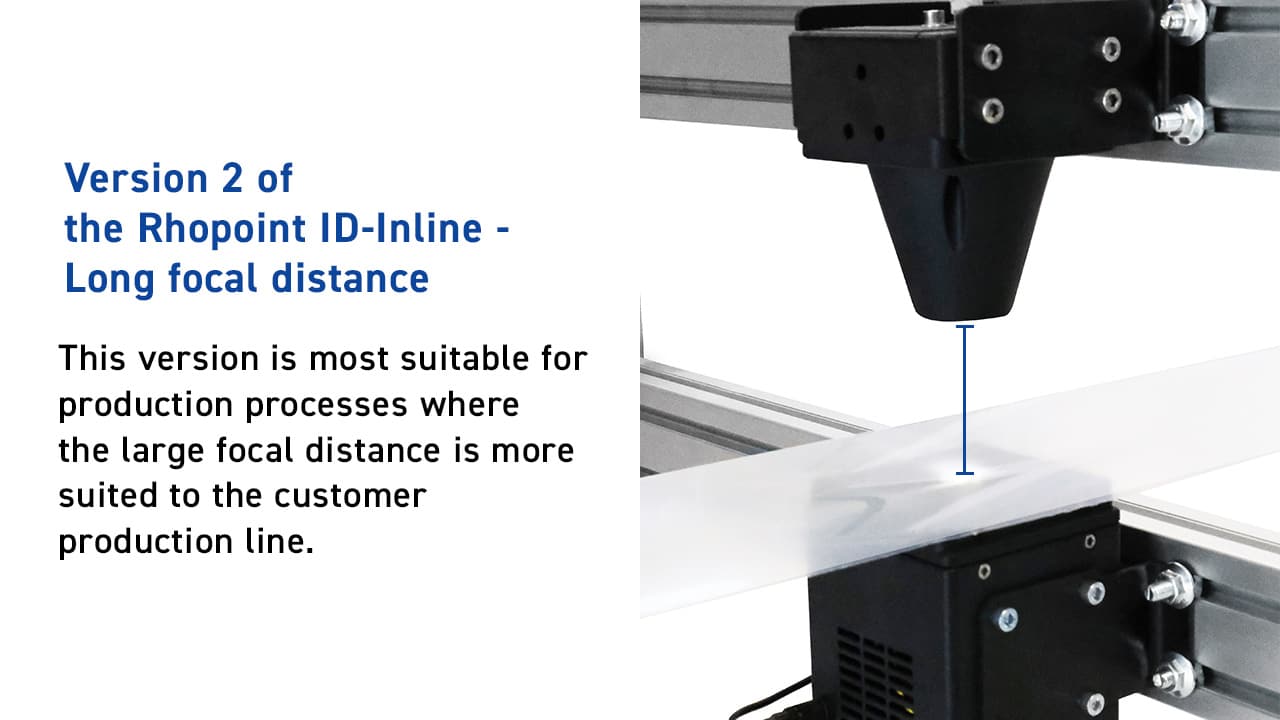
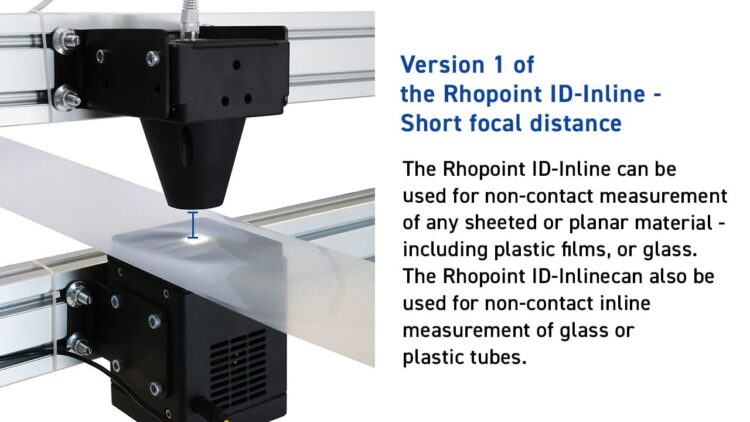
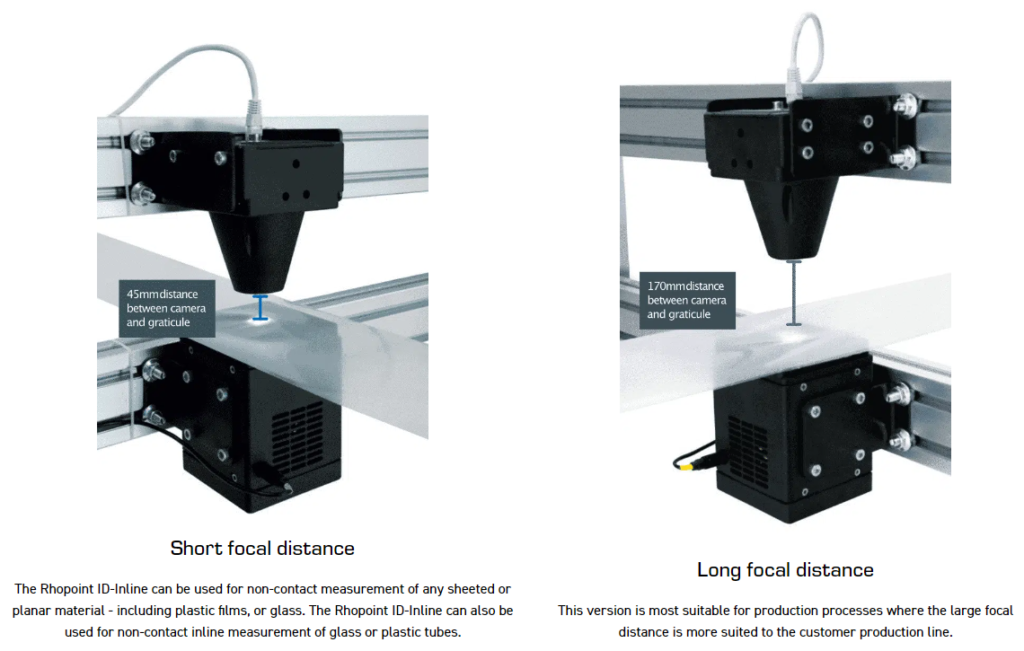
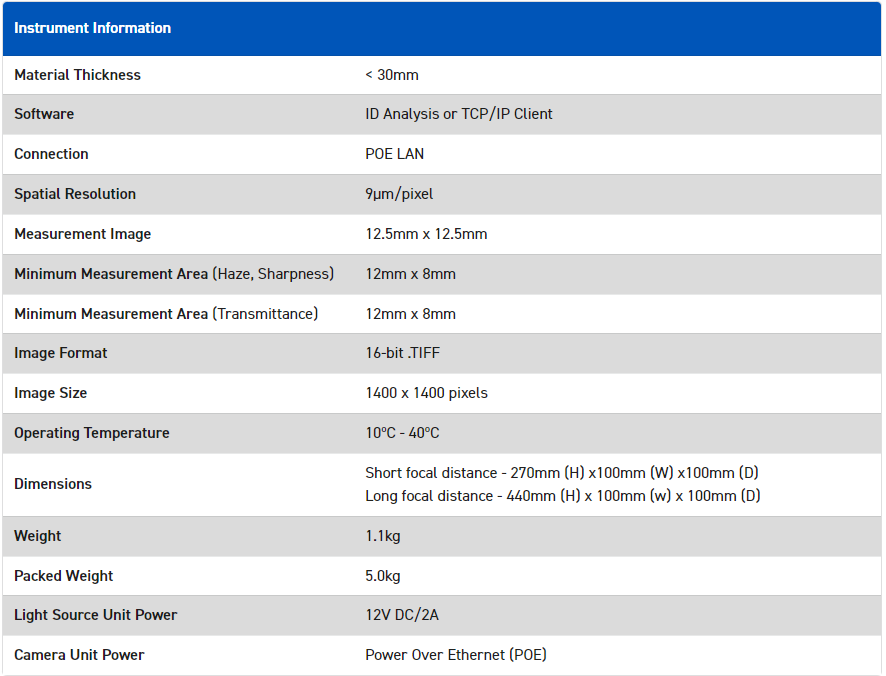
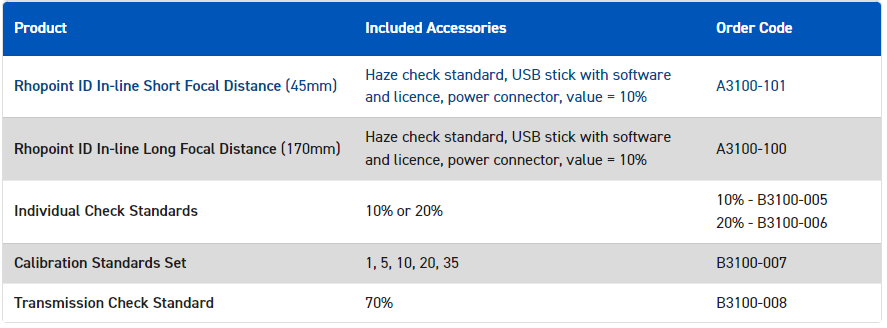
There are two versions of the Rhopoint ID-Inline. A short focal length version which has a separation distance of 45mm between the camera and graticule, or the long focal distance version which has a separation distance of 170mm.
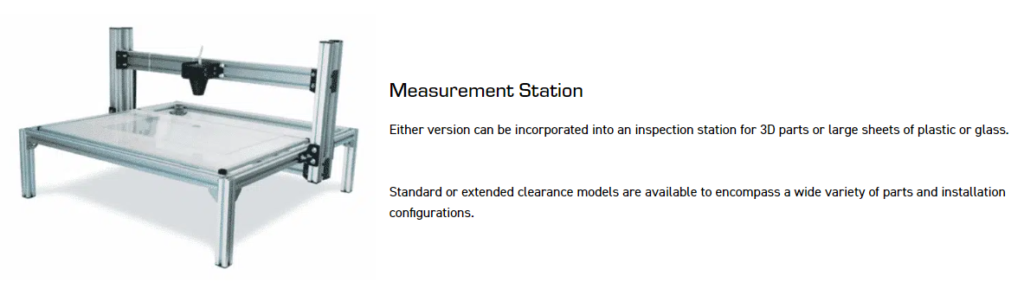
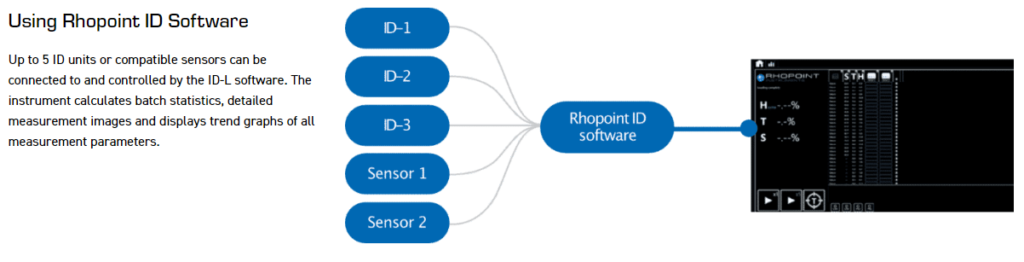
Flexible software allows single or multiple ID sensors to be combined with compatible measurement devices and tabulated in the Rhopoint ID laboratory software.
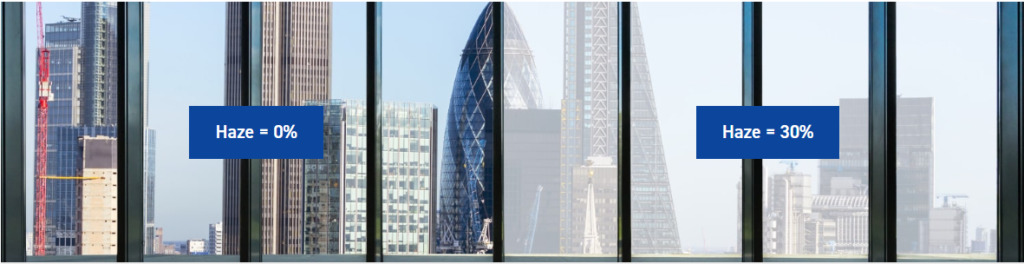
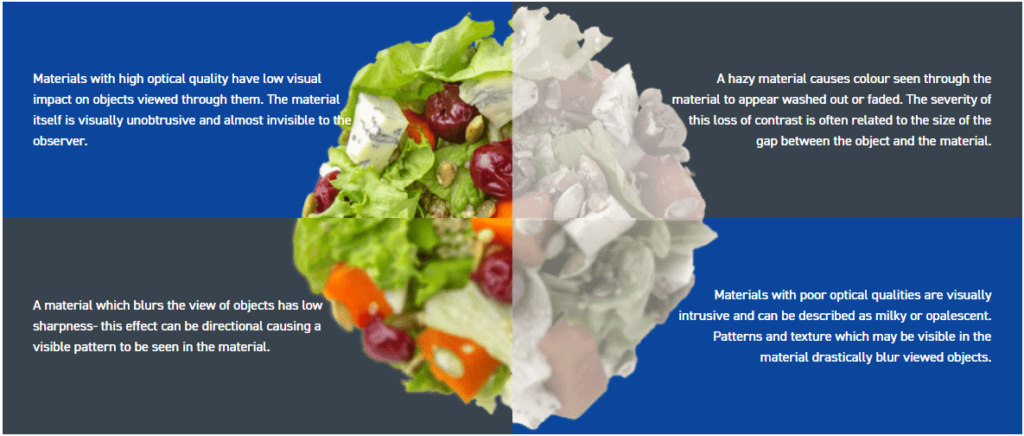
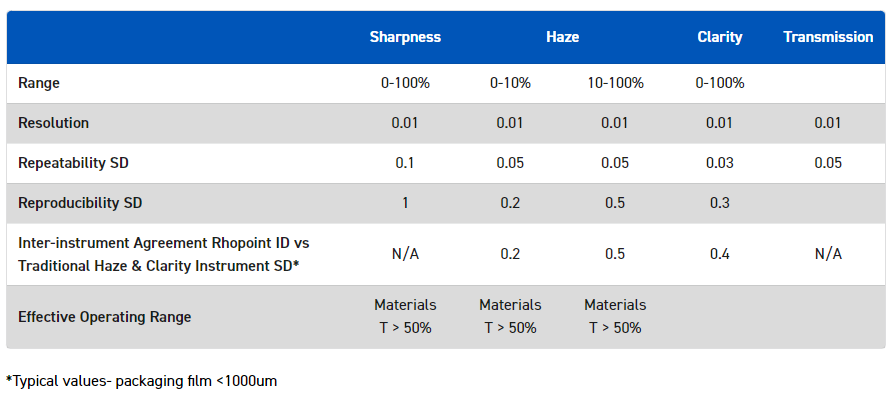
Haze: quantifies the loss of contrast for objects viewed through a material.
When a material has haze, it changes the appearance of both the material and any objects viewed through it. This can lead to a reduction in perceived quality.
Measure Haze with the Rhopoint ID to ensure visibility of products are at their best and can be seen properly by the customer.
Haze can be affected by factors such as the choice of resin, the moulding process and any surface textures. Haze can be caused by:
For example, a plastic with an incorrect melt viscosity for a particular process.
Cooling a plastic material too quickly can introduce micro textures onto the surface of the film or structures in the bulk which reduce optical quality.
Wear and tear in moulds, chill rollers and slip dies can induce visible surface defects in the material.
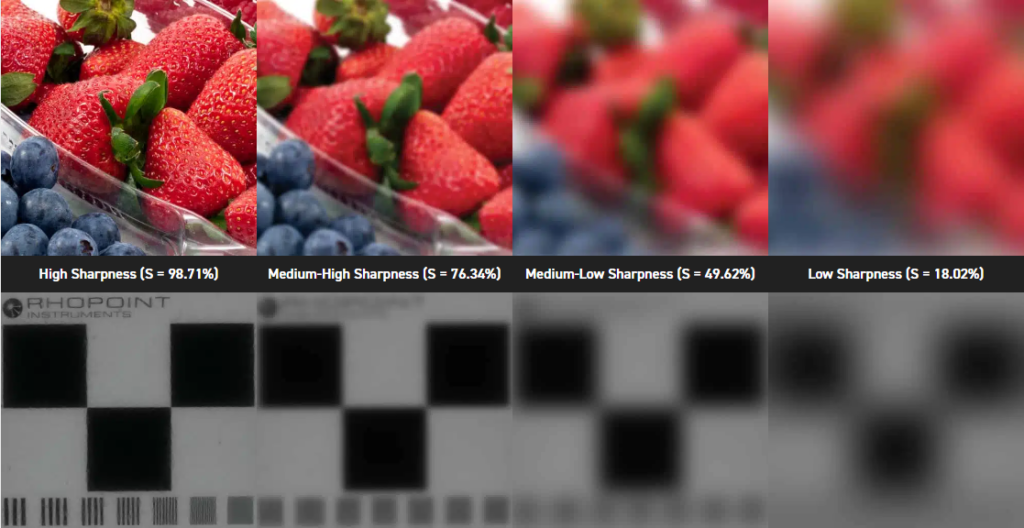
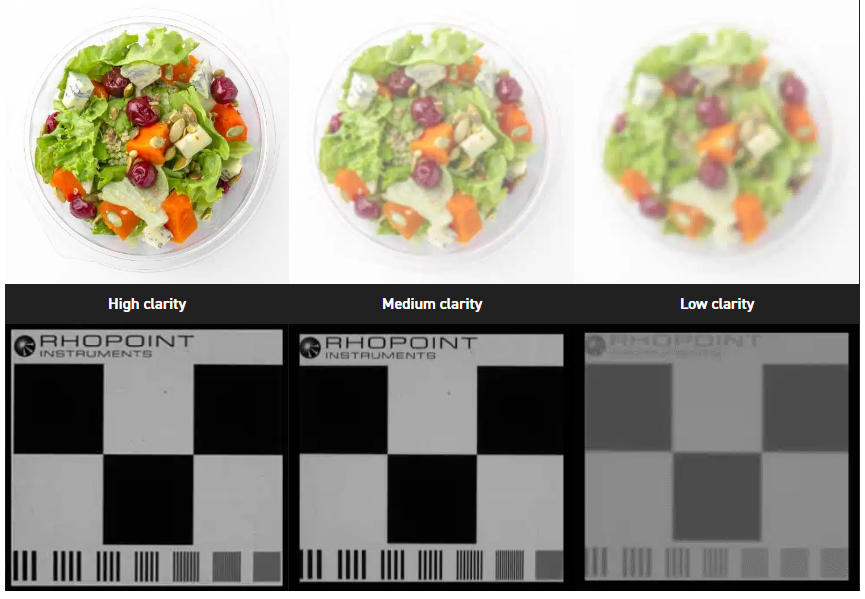
Sharpness quantifies the loss of perceived detail for objects viewed through a material.
When viewed through a material with high sharpness, an object appears sharp and distinct. As material sharpness decreases, the object appears blurry and obscured.
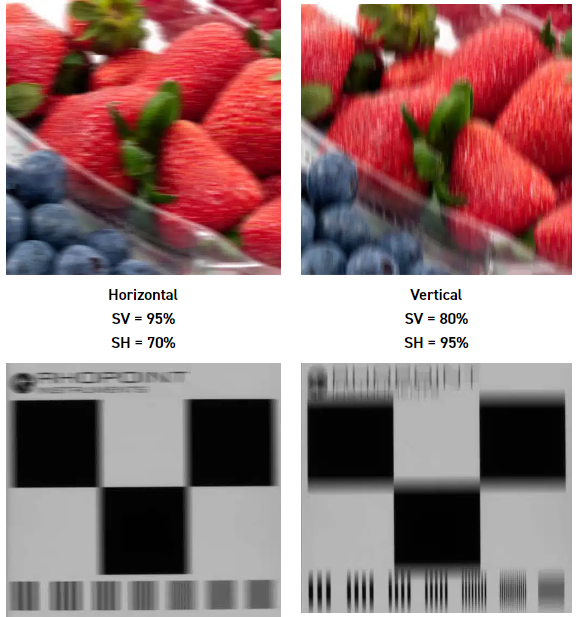
A material can often exhibit optical effects which are directional. These phenomena are often induced in plastic parts by specific processing faults.
Visible texture is a common feature of plastic films and causes a significant reduction in their see- through quality.
The Rhopoint ID is the only instrument that can measure directional effects in materials using the ID laboratory analysis software.
The images to the right show the visual impact of different ID Sharpness (S) values in vertical and horizontal directions.
Measuring directional effects can be used in advanced optical quality control and for adjusting processing parameters to obtain optimal transparency.
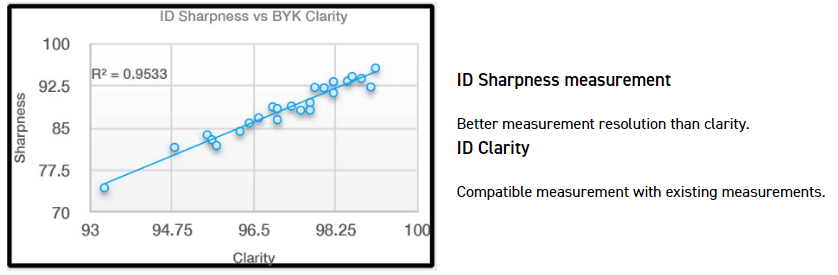
Quantifies the blurriness of an object when viewed through a material, results are proportionate with Sharpness, but the measurement scale is compressed and the measurement resolution is reduced.
Clarity is a scale used by traditional haze and clarity meters. When measured using the 8mm adaptor plate, Rhopoint ID Clarity data conforms to specifications written for these meters.
Inter-instrument Clarity agreement between Rhopoint ID and traditional sphere instruments for commercial plastic films (<1000μm) is typically <0.4% C (SD).
Inter-instrument Clarity agreement between traditional sphere instruments and Rhopoint ID for thick transparent plastic materials (<6mm) is typically <0.5% C (SD).
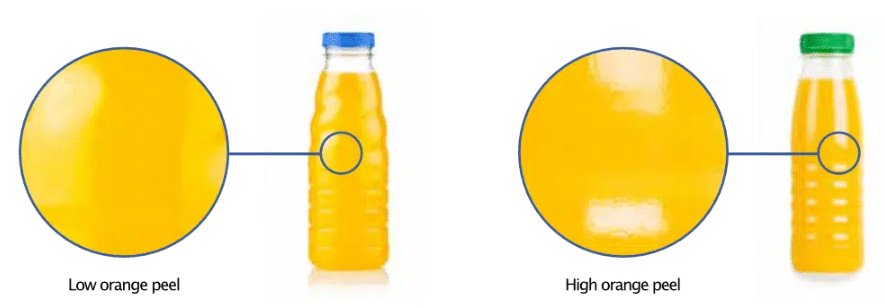
Waviness is an optical effect caused by large structures (0.1-2mm) on the surface of the material. If the structure is homogeneous it is often described as orange peel – the surface resembles the peel of an orange.
If the effect is anisotropic, visible lines can often be seen when looking through the material.
Unlike sharpness, these larger structures can cause dynamic distortion when the film is moved over a target image/object which has straight edges – the edges appear to distort and wave as the material is moved.
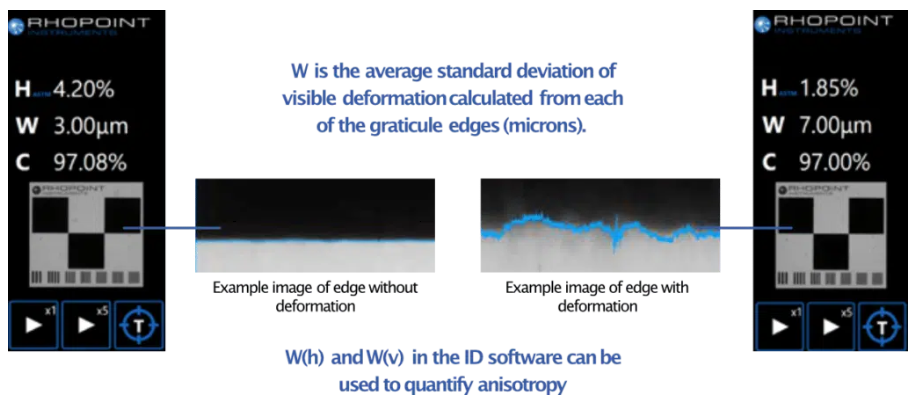
Waviness measures the visible distortion of the ID graticule edges through the material. W is the standard deviation of the edge deformation in μm.
Waviness homogeneity is assessed by comparing W (average waviness) with WH (horizontal waviness) and Wv (vertical waviness) using Rhopoint ID software available with the Rhopoint ID-L version.
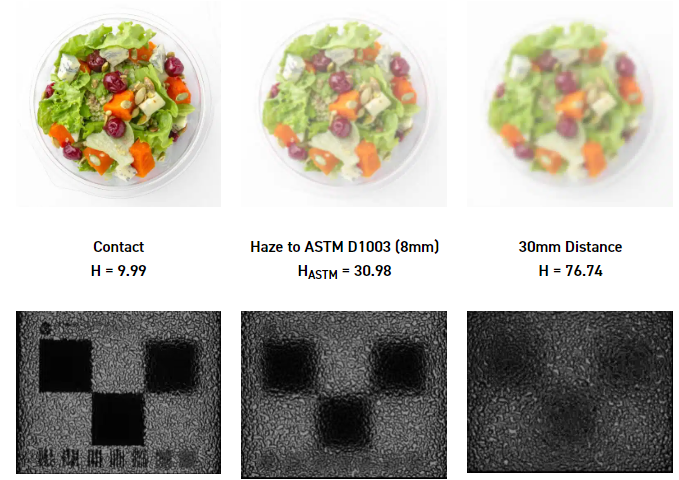
Direct measurement of haze from transmission image contrast
Measured in contact or at user-defined distance between material and object (0–40 mm)
Measures distance dependence on the same scale as ASTM Haze
Direct measurement of transparency via contrast of black and white areas on target graticule
Measure and understand distance dependent haze
When considering how material is perceived by a consumer it is important to consider how bright an object viewed through it will appear.*
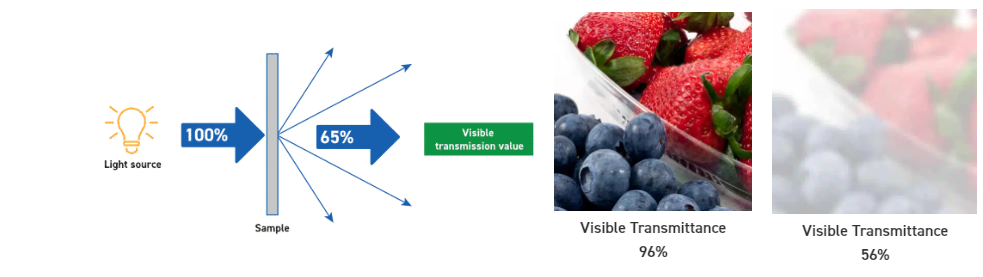
*Traditional hazemeters measure total transmission which is related to light absorption not visual perception
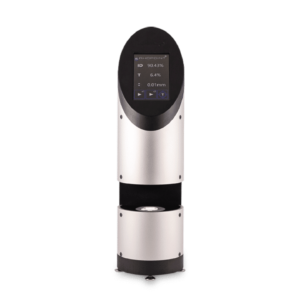
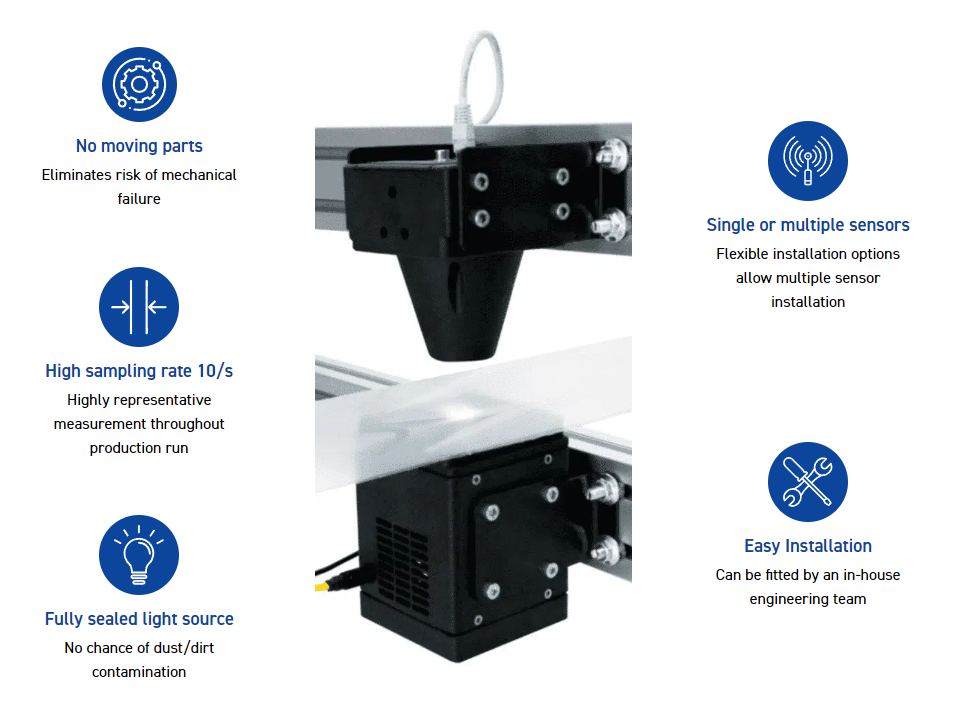
The Rhopoint ID has been designed to measure samples for haze, transmittance and sharpness quickly and safely.

Free extended 2 year warranty: Requires registration at www.rhopointinstruments.com/help-services/forms-feedback/instrument-registration/ within 28 days of purchase. Without registration, 1 year standard warranty applies.
Fast and economic service via our global network of accredited calibration and service centres. Please visit www.rhopointinstruments.com/help-services/calibration-servicing/ for detailed information.